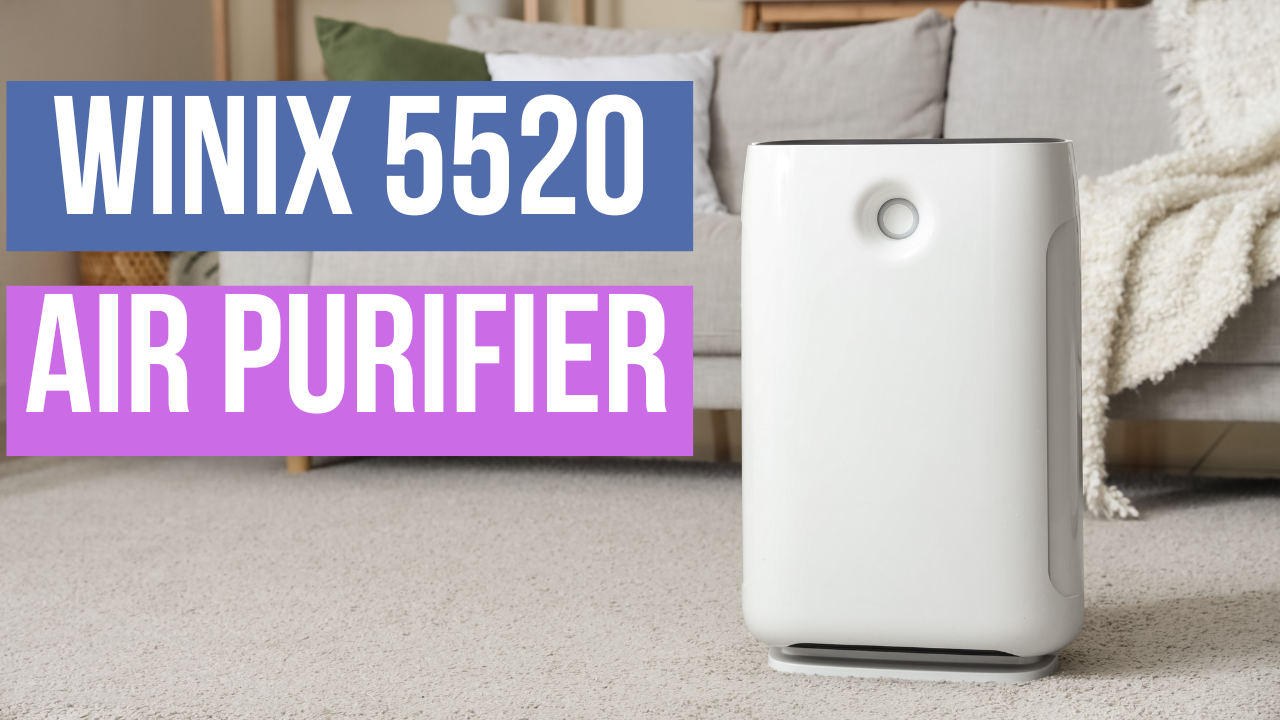

WINIX 5520 Air Purifier (Large Room, WiFi)
A large-room, 4-stage air purifier with WiFi, an air quality monitor + Auto Mode, True HEPA filtration, and a high deodorization carbon filter—built to tackle dust, smoke, pet dander, and everyday odors.

Best for: large rooms and open spaces where you want automatic air cleaning, strong odor control, and smart/WiFi monitoring
What it is and why households buy it
The WINIX 5520 is a large-room air purifier built for people who want noticeable air cleanup without constantly fiddling with settings. It combines a True HEPA filter for fine particles with a high deodorization carbon filter to help reduce lingering household odors—then ties it together with an air quality monitor and Auto Mode so it can respond to changing conditions.
The “set it and forget it” appeal is what makes it a favorite for pet homes, open living areas, and busy kitchens: run it higher when air quality drops, then let it settle back down once the air clears.
Main features at a glance
- 4-stage filtration: Pre-filter + carbon + True HEPA + PlasmaWave-style air cleaning tech (model-dependent).
- True HEPA filtration: Designed to capture fine airborne particles (dust, pollen, pet dander, smoke).
- High deodorization carbon filter: Helps cut cooking odors, pet smells, and household VOCs.
- Air quality monitor + Auto Mode: Adjusts fan speed automatically based on detected air quality.
- WiFi control: Monitor and control settings from your phone (app support varies by region/model).
- Large-room performance: Built for faster cleaning in bigger spaces compared to small “bedroom-only” units.
Details readers usually want to know
How to size an air purifier correctly
Choose based on your room size and how fast you want it cleaned. A purifier that’s “barely big enough” often has to run loudly at higher speeds. If you want quieter day-to-day use, sizing up usually helps.
Where to place it for best results
Give it breathing room. Place it where air can circulate (not wedged behind furniture), and keep a little space around the intake and outlet so it can pull dirty air in and push clean air out efficiently.
Odor control vs particle control
HEPA helps with particles (dust, pollen, dander). Odors and VOCs are mostly a carbon-filter job. If odor reduction is your priority, look for “high deodorization” or larger carbon capacity and plan to replace it on schedule.
Filter upkeep (what matters most)
Keep the pre-filter clean and replace the main filters when the indicator/manual recommends. Strong airflow is performance—once filters clog up, even a powerful unit can underperform.
Frequently Asked Questions
How do I pick the right size air purifier for my room?
Use CADR (Clean Air Delivery Rate) and/or the manufacturer’s rated room size. The EPA recommends choosing a unit with a CADR large enough for your room (higher CADR = faster particle removal).
A practical rule: AHAM suggests a smoke CADR ≈ at least 2/3 of the room’s square footage.
Expert tip: If you want it quieter, it’s usually smarter to oversize—then you can run it on a lower fan speed and still get solid cleaning.
Do I really need “True HEPA,” or is “HEPA-type” fine?
If your priority is allergies, smoke, fine dust, or pet dander, choose True HEPA. By definition, HEPA is at least 99.97% efficient at 0.3 microns (the “worst-case” particle size), and it tends to capture larger and smaller particles even better.
“HEPA-type” isn’t a standardized term, so performance varies.
What about odors and VOCs—does a carbon filter actually help?
For odors and gases, look for activated carbon (or similar gas-phase media). The EPA notes activated carbon can be effective when there’s a large amount of carbon—and also points out there’s no widely used rating system for gas removal like CADR is for particles.
Translation: odor control depends a lot on carbon quantity and replacement frequency.
Should I avoid ionizers or “ozone” air cleaners?
Yes—be cautious. The EPA warns that ozone is a lung irritant and discusses concerns with devices that intentionally generate ozone (and some electronic air cleaners that can produce ozone).
California’s air resources agency also recommends not using ozone generators in homes due to health risks.
What ongoing costs matter most after I buy it?
Two big ones:
- Filter replacement cost & schedule: performance drops as filters load up, so staying on schedule matters.
- Noise at the speed you’ll actually use: many people run purifiers lower than “turbo,” so a unit that’s strong enough on low/auto is usually the best day-to-day experience (and a reason to size up).