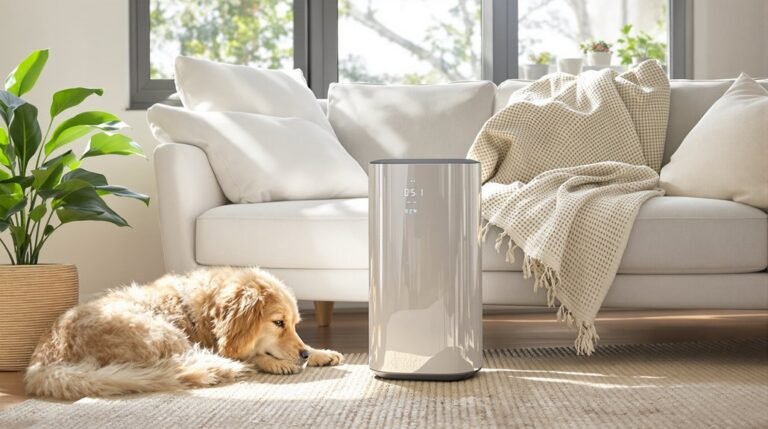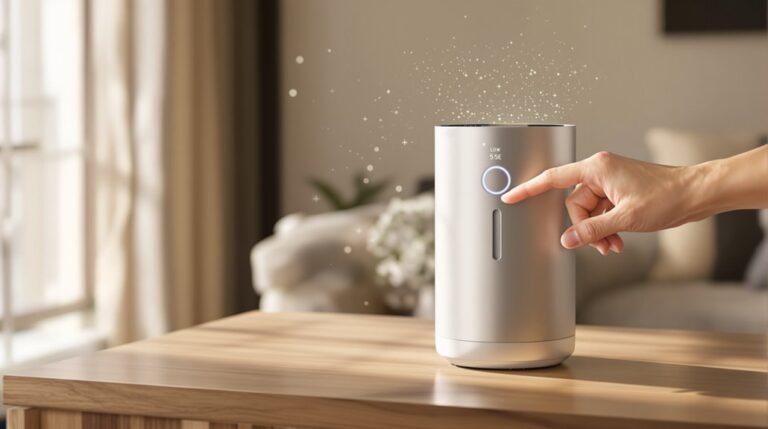

You spend about 90% of your time indoors, yet the air inside your home can be two to five times more polluted than outdoor air. Dust, pet dander, pollen, and invisible volatile organic compounds circulate through your living space every day. The right air purifier can capture up to 99.97% of these particles—but the wrong one wastes your money and barely makes a difference. Here’s how to tell them apart.
Key Takeaways
- Choose True HEPA (H13/H14) filters with sealed systems to capture 99.97% of particles and prevent air bypass.
- Size your purifier by matching CADR to room volume, aiming for 5 air changes per hour for real health benefits.
- Select units with substantial activated carbon (several hundred grams) for effective VOC and odor removal.
- For bedroom use, prioritize models with noise levels under 30 dB and place them 1–2 meters from your bed.
- Calculate five-year total cost including filter replacements and electricity, which often reaches 2–3× the purchase price.
Why Air Quality Matters: Health Benefits of Proper Air Purification
While most people spend up to 90% of their time indoors, few realize that indoor air can contain two to five times more pollutants than outdoor air. If you suffer from allergies or asthma, this matters even more. Clinical studies show that True HEPA filters—capturing 99.97% of particles at 0.3 microns—reduce PM2.5 levels enough to improve respiratory symptoms, lower cardiovascular stress, and boost sleep quality.
Here’s the key: you need adequate Clean Air Delivery Rate to achieve 4–5 air changes per hour in your space. Undersized units won’t deliver real benefits. For gases and odors, activated carbon filters with substantial carbon loads work best. Factor in filter replacement cost too—HEPA filters last about 12 months, while carbon needs swapping every 3–6 months.
True HEPA Vs HEPA-Type: Understanding Filtration Standards That Actually Work
Not all HEPA filters are created equal, and the difference between “True HEPA” and “HEPA-type” can mean the difference between breathing clean air and just thinking you are.
The gap between True HEPA and HEPA-type filters separates genuine protection from expensive false confidence.
True HEPA filters are certified to capture 99.97% of particles at 0.3 microns—the hardest size to trap. HEPA-type filters? They typically catch only 80-95% of particles, with no standardized testing behind that claim.
Look for specific labels: “True HEPA,” “H13 H14,” or AHAM verification. If you don’t see these, walk away.
Here’s what matters equally: a sealed filter system. Without proper gaskets and airflow containment, air bypasses even the best filter, destroying your particle removal effectiveness.
Yes, replacement cost runs higher for True HEPA—budget around $40-80 yearly. But for allergy sufferers, that investment actually delivers results.
CADR and Room Sizing: How to Calculate the Right Purifier for Your Space
CADR, or clean air delivery rate, tells you exactly how many cubic metres of purified air a unit pushes out each hour—and it’s the single most reliable number for matching a purifier to your room. To calculate your needs, multiply your room’s volume by your target ACH (air changes per hour). For health benefits, aim for 5 ACH.
| Room Size | Volume (2.5m ceiling) | Recommended CADR |
|---|---|---|
| 20 m² | 50 m³ | 250 m³/h |
| 30 m² | 75 m³ | 375 m³/h |
| 40 m² | 100 m³ | 500 m³/h |
Here’s the catch: manufacturer room‑size claims often assume just 2–3 ACH. Select a unit rated for 1.5× your square footage. Always check CADR values for smoke, pollen, and dust—use the lowest number when sizing.
Activated Carbon Filters: When You Need Them for Odors and VOCs
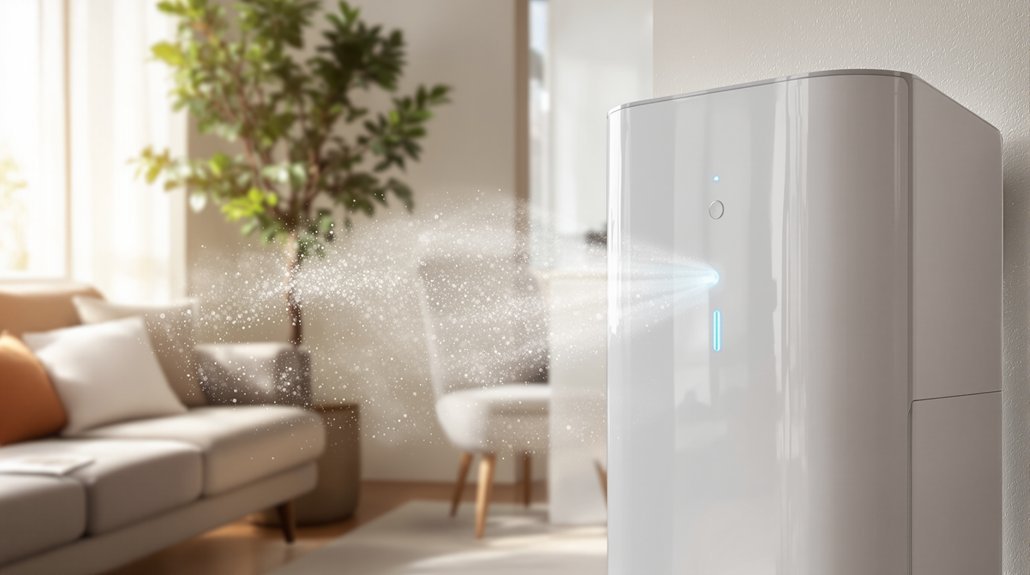
Activated carbon filters often make the difference between a purifier that handles particles and one that actually freshens your air. These filters use adsorption to trap odors and VOCs—gases that HEPA filters simply can’t catch. One gram of activated carbon contains up to 3,000 square meters of surface area, giving molecules plenty of places to stick.
Here’s the catch: thin carbon layers under 100 grams offer minimal, temporary relief. For persistent pet odors or cooking smells, you’ll want systems with several hundred grams to a kilogram of carbon.
Filter replacement matters too—carbon filters saturate within 3–6 months in odor-heavy homes and can actually release trapped chemicals once full.
Budget for recurring carbon filter costs when comparing purifiers. That ongoing expense determines true value.
Noise Levels and Bedroom Use: Finding a Purifier That Won’t Disrupt Your Sleep
Quiet operation often separates a purifier you’ll actually use from one that collects dust in a closet. For bedroom use, look for models with a sleep/low noise level at or below 30 dB—ideally 22–25 dB, which is roughly whisper-quiet. The Blueair Blue Pure 211+ and Coway Airmega 400S both achieve sleep-mode ratings around 22–24 dB.
Place the unit 1–2 meters from your bed on a stable surface with clear airflow around the intake and exhaust. This reduces vibration noise and improves efficiency. Choose a model with a reliable PM2.5 sensor and auto mode so it runs quietly overnight, ramping up only during pollution spikes.
One trade-off: make sure your purifier still delivers 4–5 ACH (air changes per hour) at low speed, or pre-clean before bed.
Smart Features Worth Paying For: Sensors, Auto Modes, and Filter Tracking
While flashy app themes and voice responses might look impressive on a product page, the smart features that actually matter come down to accurate sensors, responsive auto modes, and reliable filter tracking.
| Feature | What It Does | Why It Matters |
|---|---|---|
| PM2.5 sensors | Provide real-time numerical readouts of particle levels | Detects smoke and cooking particles accurately |
| VOC sensors | Monitor chemical compounds in air | Alerts you to cleaning products, paints, or off-gassing |
| Filter life tracking | Combines runtime with air quality data | Prevents operating with saturated filters |
Look for CADR-linked auto settings that let you set specific air quality thresholds—like a target PM2.5 value. Auto mode then adjusts fan speed automatically, maintaining your desired air quality without running unnecessarily loud.
Total Cost of Ownership: Calculating Filters, Energy, and 5-Year Expenses
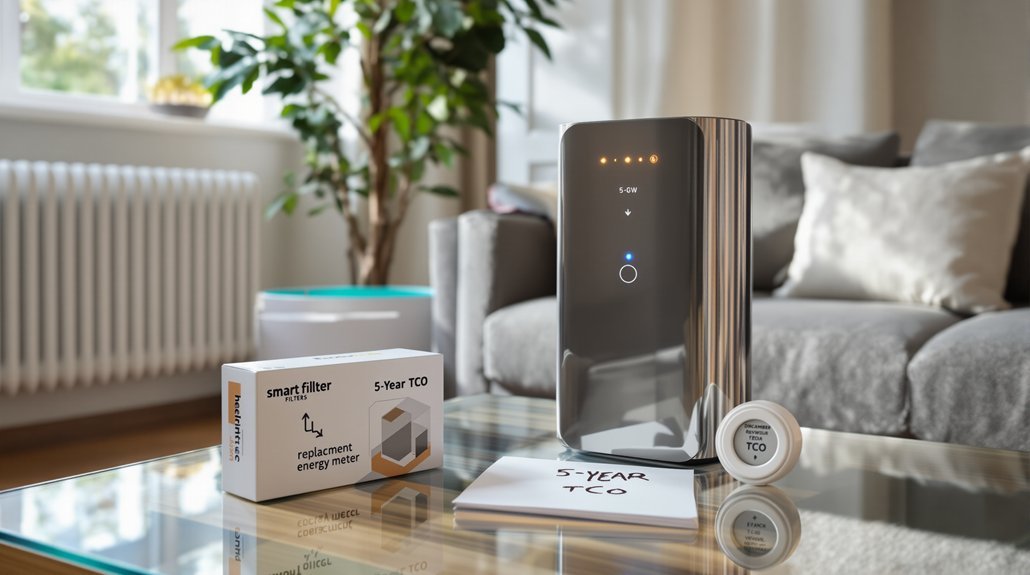
Because the sticker price tells only part of the story, you’ll want to map out the full five-year cost before committing to any air purifier.
The sticker price is just the beginning—map out five years of costs before you commit.
HEPA filters typically need replacement every 12 months, costing £30–£100 each. Carbon filters require more frequent swaps—every 3–6 months in odor-prone homes—adding £20–£80 per change. Your actual filter usage depends on air quality and runtime.
Electricity adds up quickly too. A mid-range unit running continuously at 30–50 watts costs roughly £80–£130 annually. Energy Star-rated models can trim this appreciably.
Here’s the reality: your 5-year total cost often reaches 2–3 times the purchase price. A £200 purifier might actually cost £600–£800 over five years. Calculate cost per cubic metre cleaned by dividing total expenses by CADR to find genuine long-term value.
Common Mistakes to Avoid: Ozone Generators, Undersized Units, and False Claims
Understanding your total costs puts you ahead of most buyers, but even savvy shoppers stumble when misleading marketing enters the picture.
Here are four critical mistakes to avoid:
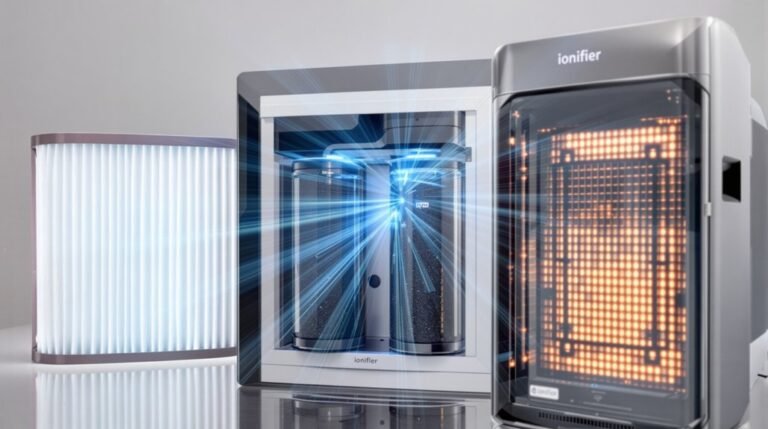
- Buying ozone generators or ionizers – These devices produce harmful ozone and don’t replace True HEPA filtration for allergens and PM2.5.
- Choosing undersized units – Ignore room-size marketing. Calculate CADR using room volume × 5 air changes per hour, or use the rule: CADR ≥ 2/3 × room m² × 10.
- Falling for HEPA‑like claims – Only True HEPA (99.97% at 0.3 µm) or certified H13/H14 filters reliably capture fine particles.
- Expecting odor control from thin carbon – Meaningful VOC removal requires substantial carbon mass—hundreds of grams minimum for persistent odors.
Also verify sealed-system design to prevent air bypass.
Frequently Asked Questions
Can I Run My Air Purifier 24/7 or Should I Turn It off Sometimes?
You can absolutely run your air purifier 24/7—continuous operation actually delivers the best VOC removal and overall air quality.
Modern units use minimal energy, so energy costs stay low, typically $3–10 monthly.
However, constant use does reduce filter lifespan faster. Check your warranty coverage, as most manufacturers expect regular operation.
Consider lower fan settings at night to minimize noise levels and reduce sleep impact while maintaining clean air.
Where Exactly Should I Place My Air Purifier in a Room for Best Results?
Place your air purifier in the center of room when possible, keeping it at least 3 feet from walls.
Avoid corners since they restrict airflow.
For targeted cleaning, position it near pollutant source like a litter box or smoking area.
Near door placement catches particles entering your space.
In bedrooms, bedside positioning works great.
Elevated placement on a table improves circulation, and near air return vents boosts whole-home distribution.
How Often Should I Clean the Pre-Filter Between Full Filter Replacements?
You should clean your pre-filter every one to two weeks as part of your weekly maintenance routine.
Check for visible debris and pet hair buildup, which can cause airflow blockage and reduce performance.
Use simple cleaning tools like a vacuum with a brush attachment or rinse washable models under cool water.
Following manufacturer guidelines for pre-filter care directly improves filter longevity and keeps your air purifier running efficiently.
Do Air Purifiers Help With Seasonal Allergies From Outdoor Pollen Entering My Home?
Yes, air purifiers markedly reduce seasonal allergy symptoms when pollen enters your home. True HEPA filters achieve 99.97% pollen capture efficiency, while filters rated MERV 13 or higher trap most allergen particles before they settle on surfaces.
You’ll get better results by improving window sealing and positioning units to optimize airflow patterns throughout rooms. Consider seasonal maintenance—replacing filters more frequently during peak pollen months guarantees consistent protection.
Can One Powerful Air Purifier Clean Multiple Rooms or Do I Need Separate Units?
You’ll typically need separate units for the best results. A single powerful purifier can handle open doorways between adjacent spaces, but room coverage drops markedly as air travels farther.
For effective air changes per hour, proper unit placement in each main living area works better than relying on portable circulation alone. Your multi room strategy could include HVAC integration with whole-house filtration for consistent coverage throughout your home.
Bottom Line
Choosing the right air purifier comes down to matching your specific needs with proven technology. Stick with True HEPA filtration, size your CADR to your room, and factor in filter replacement costs before you buy. Skip the gimmicks and ozone-producing units entirely. When you invest in a properly sized, certified purifier and maintain it consistently, you’ll breathe cleaner air for years to come.