
Living in an apartment means you’re sharing walls, ventilation systems, and sometimes air quality problems with your neighbors. Whether it’s cooking odors drifting through hallways, wildfire smoke seeping past window seals, or stuffy air that never seems fresh, small spaces present unique challenges. The good news? You don’t need expensive whole-home systems to breathe easier. A few targeted strategies can transform your indoor environment—and the solutions might surprise you.
Key Takeaways
- Use a portable HEPA air purifier or build a low-cost Corsi-Rosenthal box to effectively filter PM2.5, pollen, and smoke particles.
- Monitor air quality with a CO2/VOC sensor to identify whether you need better filtration, ventilation, or humidity control.
- Maintain indoor humidity between 30–50% using a humidifier or dehumidifier to prevent mold growth and respiratory irritation.
- Open windows for 10 minutes daily when outdoor air is clean and run exhaust fans while cooking to reduce pollutant buildup.
- Upgrade HVAC filters to MERV-13 where possible, since central systems often allow indoor pollutant levels to exceed outdoor concentrations.
Budget:Thinking
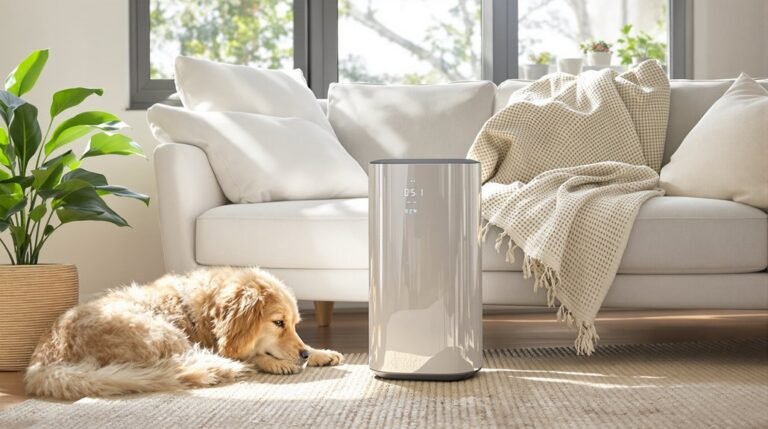
When you’re working with a tight budget, smart spending matters more than big spending. A basic portable HEPA purifier or small dehumidifier runs $38–$50 and handles most single-room needs effectively.
For even better value, build a Corsi‑Rosenthal box using a $20–$40 box fan and four MERV‑13 filters. This DIY setup matches purifiers costing $200 or more.
Before buying anything, consider a CO2/VOC monitor ($50–80). It’ll tell you whether you actually need filtration, ventilation, or humidity control—preventing wasted purchases.
Choose equipment with room‑sized CADR ratings that match your space. Undersized units won’t cut it.
Affordable air quality solutions also include free habits: change filters regularly, run fan or purifier during events like wildfires or high-pollen days, and open windows for 10 minutes daily when outdoor air is clean.
Let Me Analyze the Background Information and Create 9 Second-Level Headings for the Blog Post Titled “How to Improve Air Quality in Apartments and Small Spaces”
Budget-friendly solutions get you started, but understanding the full picture of indoor air quality helps you make smarter choices over time.
Start simple, learn as you go—better air quality is a journey, not a one-time fix.
You’ll learn why small spaces face unique challenges with PM2.5 and other pollutants. A CO2 monitor reveals when your ventilation needs attention, while a quality air purifier with a HEPA filter tackles particles effectively. Activated carbon handles odors and gases that HEPA can’t catch.
Source control matters more than most people realize—it’s easier to prevent pollutants than remove them. Humidity control keeps your space between 30-50% RH, preventing both mold and dryness. When budgets are tight, a DIY Corsi-Rosenthal box delivers surprisingly strong performance.
These nine areas cover everything you need for cleaner air in apartments and dorms.
Based on the Background Information, I Need to Cover
Although your apartment might feel perfectly fine, invisible pollutants could be accumulating right now without you knowing it. Airborne particulate matter, allergens, and even viruses can build up when ventilation is poor.
Start by grabbing a CO2 monitor—it’s your early warning system. High readings mean stale air and inadequate air exchange. When outdoor air quality is good, open windows for at least 10 minutes daily to flush out pollutants.
A portable HEPA air purifier sized to your room’s square footage tackles what ventilation can’t. On a budget? Build a Corsi-Rosenthal box instead. If you’ve got forced air, install a MERV-13 filter.
Don’t forget indoor humidity. Keep it between 30–50% using a humidifier or dehumidifier to prevent mold and reduce allergy triggers.
Why Indoor Air Quality Matters in Small Spaces
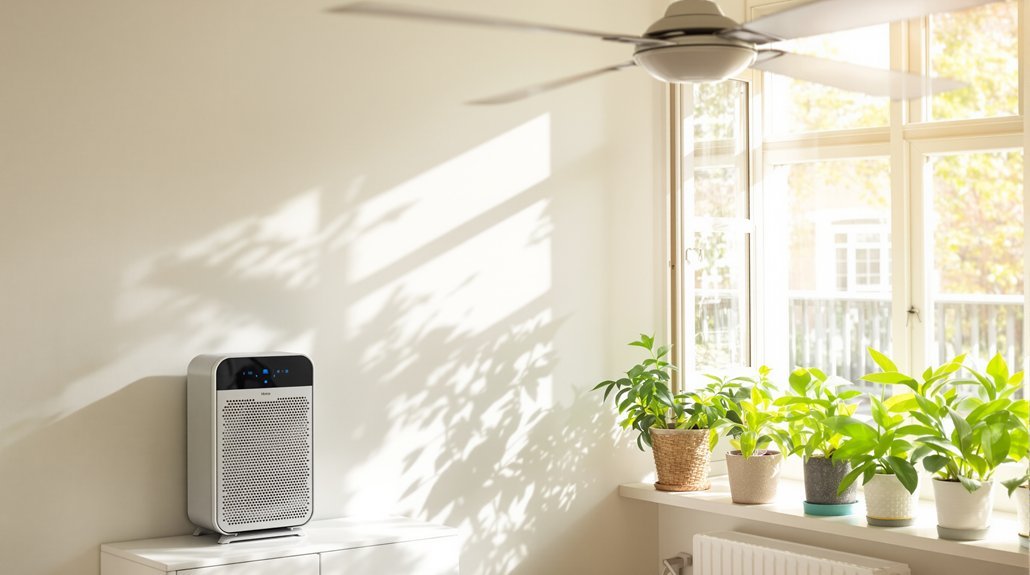
Those tools work—but understanding why small spaces need them helps you use them wisely.
Apartments concentrate airborne particles in ways larger homes don’t. When someone coughs or cooks in a 600-square-foot studio, you’re breathing a higher dose of whatever’s floating around. The EPA estimates indoor pollutant concentrations can run 2–5 times higher than outdoor levels.
Small spaces mean bigger doses—indoor pollutants can hit 2–5 times outdoor levels in apartments.
Without proper ventilation, particulate matter, CO2, and volatile organic compounds build up fast.
Central HVAC systems in apartment buildings create another challenge. You can’t control filter quality or duct cleanliness, so your indoor air quality depends partly on building management.
Key factors to monitor in small spaces:
- CO2 levels — high readings signal poor air exchange and increased infection risk
- Relative humidity — aim for 30–50% to prevent mold and respiratory irritation
- Particulate matter — an air purifier with quality filters removes what ventilation misses
Central HVAC Limitations
When your apartment building runs a central HVAC system, you’re sharing air infrastructure with every other unit—and you can’t control much about it. You can’t choose when HVAC filters get replaced or verify duct contamination levels. Recirculated air travels through shared ducts, potentially carrying odors, microbes, and smoke from neighboring apartments into your space.
Central systems often prioritize energy efficiency over fresh-air exchange, which means indoor pollutants can reach concentrations 2–5 times higher than outdoor levels. Ventilation rates may fall short of what you actually need.
Your best move? Take control at the room level. Air purifiers with HEPA filters remove particulates your building’s system misses. Portable monitors tracking CO2 and humidity help you understand what’s actually happening in your air.
Types of Products (Air Purifiers, Fans, Humidifiers, Dehumidifiers)
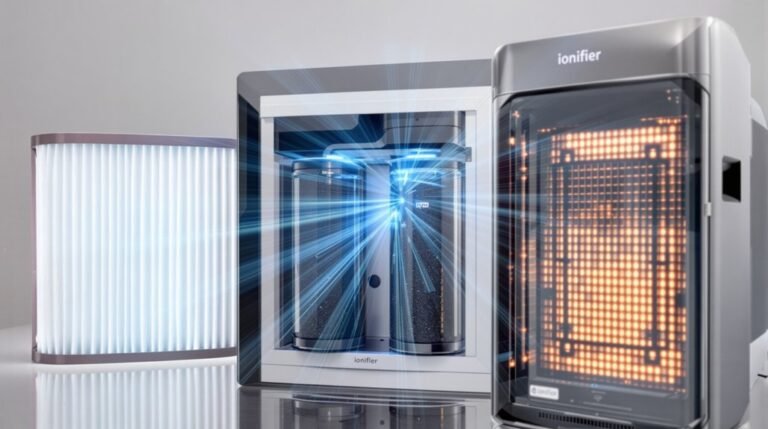
Since you can’t upgrade your building’s HVAC, portable devices give you room-by-room control over what you breathe. A portable HEPA air purifier is your best defense against indoor pollutants—true HEPA filters capture 99.97% of particles down to 0.3 microns, including dust, pollen, and smoke. Check the room CADR rating to match the unit to your space. For odors and VOCs, add an activated carbon filter.
Here’s what works in dorms and apartments:
- Air circulation fans move stale air and dilute pollutants when windows stay closed
- Humidifier units raise relative humidity to 30–50% when air feels too dry
- Dehumidifier models prevent mold in damp basements or bathrooms
Each device tackles a different problem, so assess your specific needs first.
Air Quality Monitors
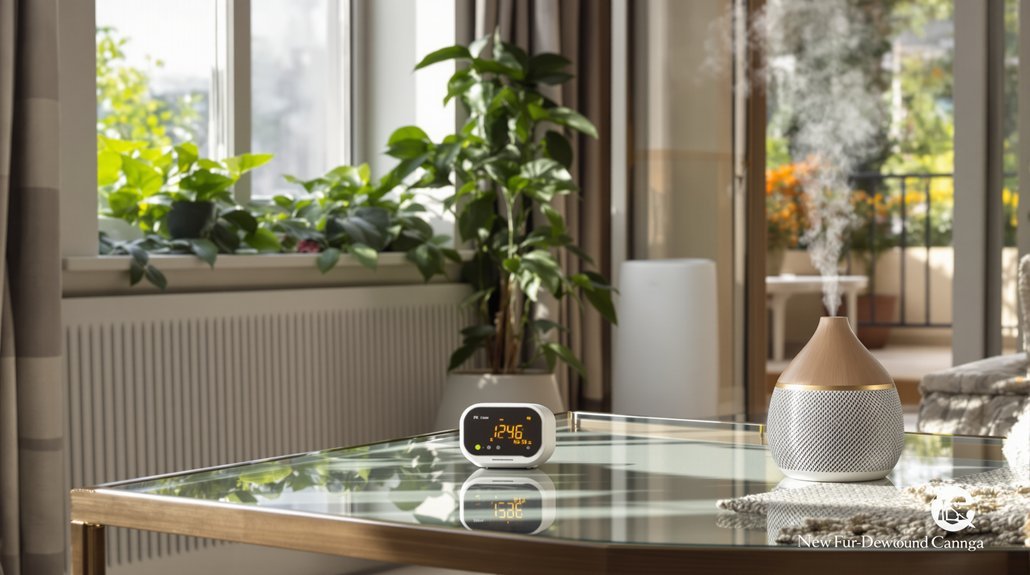
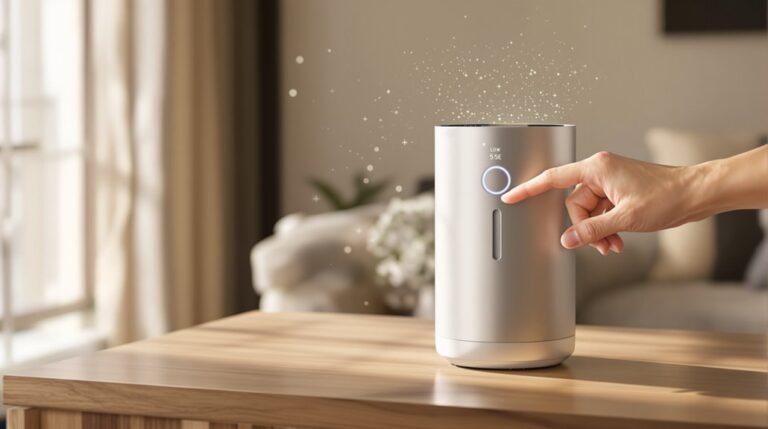
Knowing which device to deploy starts with understanding what’s actually in your air—and that’s where air quality monitors come in. These compact units detect PM2.5, VOCs, radon, humidity, and CO2—pollutants your nose simply can’t measure.
CO2 monitoring serves as a practical proxy for ventilation quality. When levels climb above 1,000 ppm, you’re breathing too much recycled air, which increases infection risk. The Airthings Wave Plus tracks CO2, radon, and VOCs while syncing to your phone for trend alerts.
Use your readings to guide purchases: persistent high PM2.5 calls for a HEPA air purifier, while elevated humidity suggests a dehumidifier. For accurate placement and usage, position monitors at breathing height on a shelf, away from windows or vents, and review multi-hour averages rather than momentary spikes.
Choosing Devices for Small Spaces (Size, Noise, Features)
Matching a purifier to your room size takes the guesswork out of clean air. Check the CADR or square-foot rating on any portable air purifier before buying—a unit rated for 250 sq ft works perfectly for a typical 12’×20′ bedroom.
Size matters—match your purifier’s CADR rating to your room’s square footage for truly effective air cleaning.
Look for noise level specs under 40 dB on sleep mode to avoid disturbing your rest.
When shopping, prioritize these features:
- HEPA filter with activated carbon to capture particles and neutralize odors
- Built-in air quality sensor that adjusts fan speed automatically
- Compact footprint under 10 lbs for easy repositioning
Don’t forget replacement filter cost—some budget purifiers have expensive filters that add up quickly.
If humidity’s a concern, choose a dehumidifier with an adjustable humidistat and auto shutoff for hands-free comfort.
Specific Product Recommendations
Narrowing down your options becomes easier when you focus on proven performers in each category.
For a portable HEPA air purifier, check the room CADR rating against your square footage—aim for at least 200 ft³/min in spaces up to 500 square feet. True HEPA filtration captures PM2.5, pollen, and smoke effectively.
The Blueair Pure Fan Auto ($270–$300) combines cooling, HEPASilent filtration, and automatic air-quality sensing.
For monitoring, the Airthings Wave Plus ($230) tracks radon, CO2, VOCs, and indoor humidity so you know exactly what needs fixing.
If moisture’s your problem, a compact humidifier or dehumidifier keeps levels between 30–50%.
On a tight budget, build a Corsi-Rosenthal box using a box fan and four MERV-13 filters—it’s surprisingly effective for larger rooms.
Frequently Asked Questions
How to Fix Poor Air Quality in an Apartment?
Run a HEPA air purifier sized for your room and check window seals for drafts that let pollutants in.
Use cooking ventilation—like a range hood—to reduce fumes, and schedule regular vent cleaning.
Control humidity with humidifier use between 30–50%.
Add odor absorbers for mustiness and manage pet dander through frequent cleaning.
Install a carbon monoxide detector, follow building smoking policies, and consider houseplants selection for mild filtration support.
How to Fix Poor Ventilation in an Apartment?
Start by using window fans to pull stale air out and create cross-ventilation. Check door undercuts—a half-inch gap helps airflow between rooms. Consider an exhaust retrofit or inline ventilator if your bathroom fan’s weak.
Balcony venting works great for quick air exchanges. Do simple airflow mapping with incense to spot dead zones. Add humidity control to prevent stuffiness, and keep CO2 below 1,000 ppm.
How to Improve Poor Indoor Air Quality?
Run a HEPA air purifier sized to your room’s square footage to capture pet dander, smoke, and allergens.
Keep humidity between 30–50% for mold prevention and comfort.
Eliminate VOC sources like scented products and fresh paint when possible.
Install carbon monoxide detectors, especially near gas appliances.
If you smoke, smoking cessation dramatically improves air quality.
Skip most houseplants selection claims—they don’t meaningfully filter air.
Follow maintenance schedules for filters monthly.
How to Circulate Air in a Small Apartment?
Place a box fan in one window blowing outward while opening another window or door to create cross ventilation. This establishes clear airflow pathways that move stale air out and pull fresh air in.
Set your ceiling fan direction counterclockwise in summer for a cooling downdraft.
Use portable fans or a vent booster to improve circulation between rooms.
Door draftstoppers help control room zoning and direct airflow where you want it.
Bottom Line
The user wants me to write a very short (75 word) conclusion for a blog post about improving air quality in apartments and small spaces. I need to:
- Use second person point of view
- Use active voice
- Use contractions
- Be friendly and professional
- Use vocabulary accessible to 10th-11th grade readers
- Use medium-length sentences with occasional short ones
- Keep a calm, confident tone
- Provide concrete details
- Use plain, direct language
- Avoid redundancy and fluff
- Keep it around 75 words
Let me write a conclusion that wraps up the main points from the background information: source control, ventilation, filtration, and monitoring.
Final Thoughts
You don’t need expensive equipment or major renovations to breathe cleaner air at home. Start by eliminating pollutant sources, then add a true HEPA purifier or build a DIY Corsi-Rosenthal box. Use a CO2 or PM2.5 monitor to know when to open windows or run your filter. Keep humidity between 30–50%. These small, targeted steps make a real difference—especially in compact spaces where air quality shifts quickly.