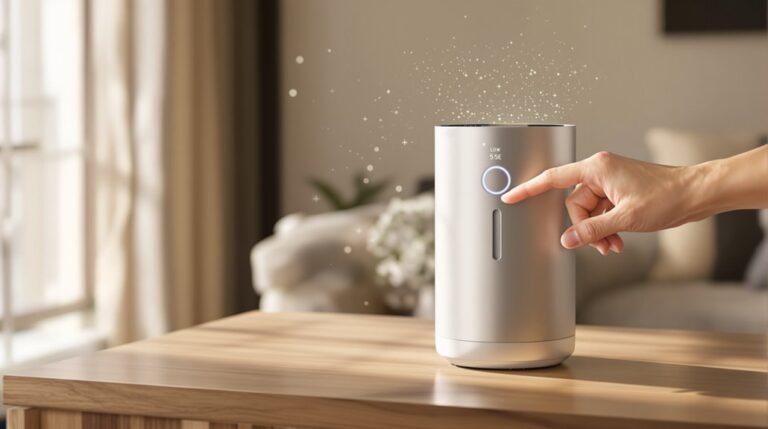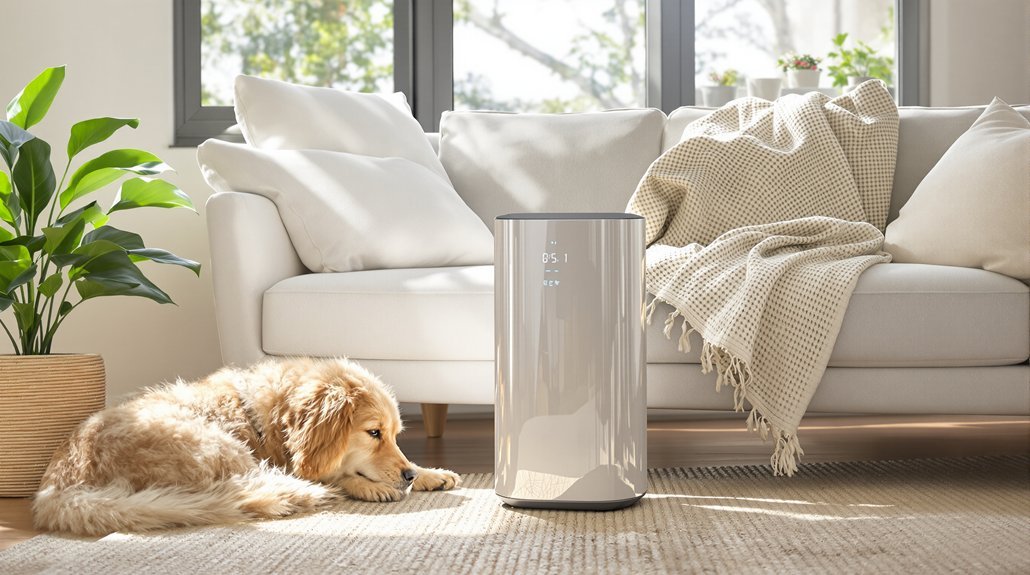

Living with pets means dealing with dander, fur, and odors that standard air purifiers weren’t designed to handle. You’ll need a unit with specific filtration stages—True HEPA for microscopic allergens, activated carbon for smells, and a pre-filter for hair—that work together to keep your home fresh. Choosing the wrong purifier wastes money and leaves you sneezing. Here’s exactly what to look for and what to avoid.
Key Takeaways
- Choose a True HEPA filter that captures 99.97% of particles down to 0.3 microns, including invisible pet dander.
- Select models with activated carbon filters containing several hundred grams of carbon for effective odor elimination.
- Match the CADR rating to your room size, allowing four to six air changes per hour in pet areas.
- Look for washable pre-filters that trap pet hair and extend the main filter’s lifespan while reducing costs.
- Ensure noise levels stay at 50 dB or less on medium settings for continuous, non-disruptive operation around pets.
Why Pet Owners Need Special Air Purifiers
If you share your home with a furry friend, you already know that pet hair and dander have a way of getting everywhere—on furniture, clothes, and floating invisibly through the air you breathe. Standard air purifiers often can’t keep up with the constant stream of particles pets produce.
That’s where specialized units come in. A true HEPA filter captures 99.97% of particles as small as 0.3 microns, which includes the microscopic dander that triggers allergies. Pet hair, while larger, clogs filters quickly without a dedicated pre-filter to catch it first.
You’ll also want activated carbon filtration to tackle odors from litter boxes, wet fur, and pet products. This combination—HEPA plus carbon—addresses both the visible mess and invisible irritants pets bring into your space.
Types Of Air Purifiers That Work Best For Pets
Because not all air purifiers handle pet-related challenges equally, you’ll want to understand which technologies actually deliver results.
Not every air purifier is built for pet owners—knowing the right technology makes all the difference.
True HEPA air purifiers capture at least 99.97% of particles 0.3 microns and larger, making them excellent for trapping pet dander.
For odor control, look for models with activated carbon filters containing several hundred grams of carbon—anything less won’t meaningfully improve air quality.
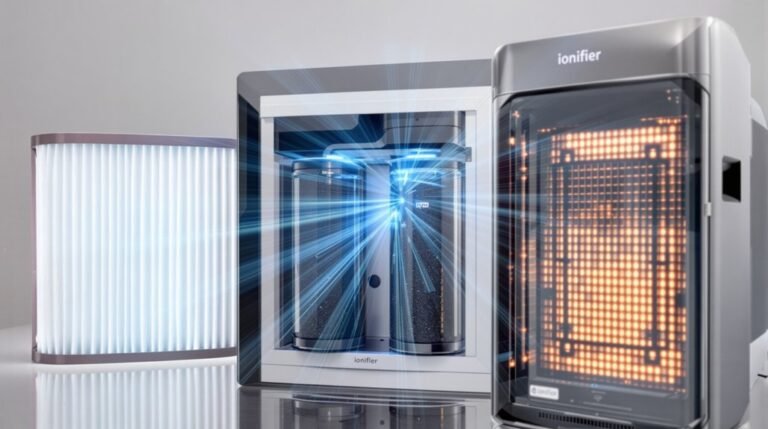
Some purifiers use ionizing technology to boost particle capture, but these can produce ozone. Stick with models certified for negligible ozone emissions to keep your pets safe.
Pay attention to CADR ratings for dust and pollen. You want a unit that provides four to six air changes per hour in your pet’s favorite rooms.
Models with washable pre-filters catch large pet hair first, extending your main filter’s lifespan considerably.
Key Features To Look For In Pet Air Purifiers
When you’re shopping for a pet air purifier, certain features matter more than others for tackling fur, dander, and those unmistakable pet smells.
Here’s what to prioritize:
- True HEPA Air Filter – This captures 99.97% of particles down to 0.3 microns, including fine dander that triggers allergies.
- Activated carbon layer – The more carbon (measured in grams), the better your filter looks at eliminating odors and VOCs.
- Washable pre-filter – A mesh layer traps hair and large fur clumps, extending your main filter’s lifespan and cutting replacement costs.
- Appropriate CADR rating – Match the dust/dander CADR to your room’s square footage for efficient cleaning.
Don’t overlook noise levels either. Look for units running at 50 dB or less on medium settings so your purifier can work continuously without disturbing you or your pets.
How To Choose The Right Air Purifier For Your Home
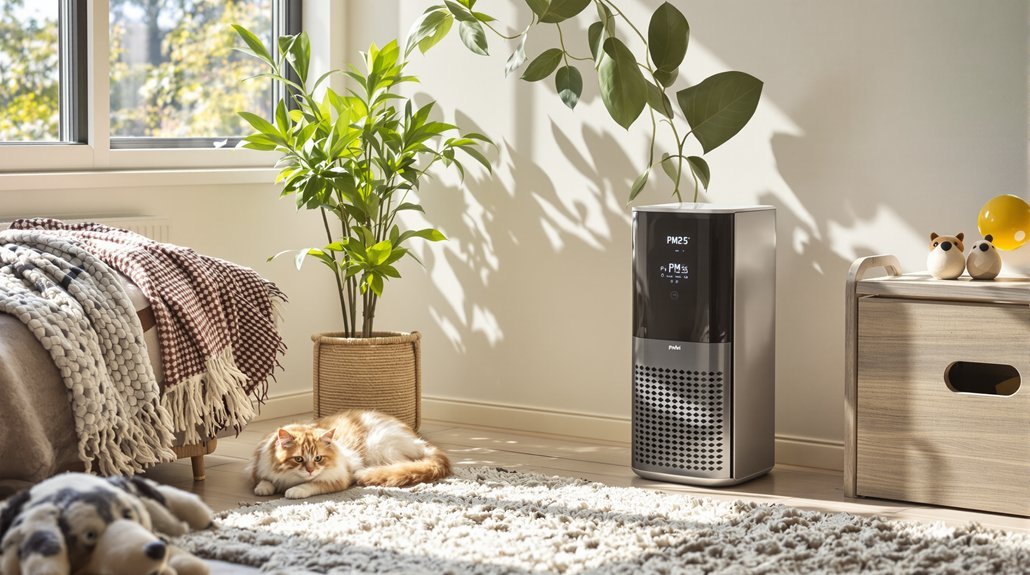
Understanding the key features is just the first step—now you’ve got to match those features to your specific living situation.
Start by measuring your room. A purifier’s CADR rating tells you how much air it can clean per minute. For spaces up to 500 square feet, you’ll want a CADR of at least 200. Bigger rooms need higher numbers.
Next, consider your specific challenges. If you’re dealing with dander and allergens, prioritize a true HEPA filter that captures 99.97% of particles down to 0.3 microns. Got odor issues too? Look for activated carbon filtration with substantial carbon weight.
Finally, think about daily life. Check that noise stays below 50 decibels on medium settings, and look for Energy Star certification. You’ll run this unit constantly, so efficiency matters.
Maintenance Tips To Keep Your Air Purifier Working
Even the best air purifier won’t help your home if you neglect basic upkeep. A clean filter means better performance and fresher air for you and your pets.
A neglected filter turns even the best air purifier into an expensive fan—maintenance is the key to fresher air.
Follow these maintenance steps to guarantee your unit keeps the air clean:
- Check and replace pre-filters every 1–3 months. Visible hair buildup restricts airflow and strains other filter stages.
- Swap HEPA filters every 6–12 months. Heavy shedders may require more frequent changes.
- Replace carbon cartridges every 3–6 months. Saturated carbon won’t eliminate odors, even if it looks fine.
- Vacuum intake grilles weekly. Position your purifier 6–12 inches from walls for peak airflow.
Run your unit continuously on low or medium in pet areas. Check filters monthly—dark, dense material signals replacement time.
Extra Steps To Improve Air Quality With Pets
Proper filter maintenance keeps your air purifier running well, but you can do more to reduce airborne pet dander and odors throughout your home.
Brush your pets two to three times weekly to capture loose fur before it becomes airborne. This simple habit markedly cuts the workload on your air cleaner. Position purifiers at least one to two feet from walls for proper airflow. An activated carbon filter will help absorb odors and VOCs from pet products.
| Action | Benefit |
|---|---|
| Brush pets 2–3 times weekly | Reduces airborne dander at the source |
| Keep 1–2 ft clearance around purifier | Ensures peak airflow and performance |
| Avoid scented filters | Protects pets’ respiratory health |
| Vacuum pre-filters weekly | Extends main filter lifespan |
Common Mistakes Pet Owners Make With Air Purifiers
When you’re keen to tackle pet allergens, it’s easy to make choices that undermine your air purifier’s effectiveness.
Here are four common mistakes to avoid:
- Choosing carbon-only filters – Activated carbon targets odors and gases, not the 0.3-micron particles that make up pet dander. You need true HEPA or H13 filtration.
- Buying a unit with less power – An undersized CADR won’t deliver the 4–5 air changes per hour your living space needs.
- Skipping companion habits – Your purifier starts making less progress when you neglect vacuuming, grooming, and HVAC filter changes. Pre-filters clog fast.
- Ignoring filter schedules – Delaying replacement past the 6–12 month window drops CADR dramatically and increases allergen exposure.
Avoid these pitfalls, and your purifier will work much harder for you.
Frequently Asked Questions About Air Purifiers For Pets
Now that you know what to avoid, let’s tackle the questions pet owners ask most often about air purifiers.
How often should I replace the filters?
HEPA filters typically last 6–12 months, while carbon filters need replacement every 3–12 months depending on odor levels. A clogged filter makes your unit work harder and reduces effectiveness.
What CADR rating do I need?
Aim for 100–300+ m³/h depending on room size. Larger spaces need higher ratings to clear dander efficiently.
Will an air purifier eliminate pet odors?
Yes, if it has activated carbon filtration. This layer absorbs odor molecules and makes your home feel fresher. Replace carbon media regularly for best results.
Are ionizers safe for pets?
Avoid ozone-producing ionizers. Choose CARB-certified units instead.
Frequently Asked Questions
What Type of Air Purifier Is Best for Pets?
You’ll want a true HEPA purifier with an activated carbon filter for pet dander and odors. Look for models with CADR ratings of 200 or higher for medium rooms.
For HEPA maintenance, choose units with washable pre-filters to catch pet hair and extend filter life. Skip ionizers that produce ozone—they can irritate your pet’s respiratory system.
Automatic sensors help the purifier adjust to shedding and activity levels throughout the day.
Do Air Purifiers Really Help With Pet Smells?
Yes, air purifiers genuinely help with pet smells.
Units with activated carbon filters excel at odor trapping, adsorbing the volatile compounds that cause lingering odors.
HEPA filters tackle dander particles carrying odor-causing bacteria.
For best results, choose a purifier with at least 150–250 cfm smoke/odor CADR.
Where Should I Put My Air Purifier if I Have Pets?
Place your air purifier where your pet hangs out most—typically the living room or kitchen.
For floor placement, position it 3–6 feet from their favorite resting spot to catch hair and dander quickly.
Keep the intake 6–12 inches from walls for proper airflow.
For bedroom placement, set a unit near the door and run it continuously.
One purifier won’t cover your whole home, so consider additional units in pet-heavy rooms.
What Is the Best Air Filter Rating for Pets?
For MERV comparison, aim for MERV 11–13 in your HVAC system—these ratings capture fine pet dander without straining your equipment.
MERV 8 works for larger particles like pet hair but misses smaller allergens.
For standalone purifiers, True HEPA efficiency is your best bet, removing 99.97% of particles down to 0.3 microns.
If odors are an issue, look for units with activated carbon layers too.
Bottom Line
You’ve got the tools to make a smart choice. Pick a True HEPA filter that captures 99.97% of pet dander, match the CADR to your room size, and don’t skip the activated carbon stage for odors. Stay consistent with filter changes and grooming routines. Your pets aren’t going anywhere—but with the right air purifier, their dander and odors won’t linger either.