
If you’ve been sneezing, rubbing itchy eyes, or waking up congested, an air purifier might be the missing piece in your allergy-relief strategy. These devices pull airborne allergens like pollen, dust mites, and pet dander out of circulation—but only when you choose the right type and use it correctly. The wrong setup can actually make your symptoms worse. Here’s what you need to know before you buy.
Key Takeaways
- Choose a True HEPA air purifier that captures 99.97% of particles at 0.3 microns, including pollen, pet dander, and mold spores.
- Match the purifier’s CADR rating to your room size, ensuring CADR equals at least two-thirds of the square footage.
- Position the purifier a few feet from walls with unobstructed intake and run it continuously during high-allergen periods.
- Avoid ionizers, electrostatic cleaners, and “HEPA-type” filters, as they produce ozone or lack adequate filtration efficiency.
- Replace HEPA filters every 6–12 months and clean pre-filters monthly to maintain optimal allergen removal performance.
Understanding How Air Purifiers Work
Air purifiers pull contaminated room air through a series of filters that trap particles before pushing clean air back into your space.
Air purifiers work by drawing in dirty air, filtering out harmful particles, and recirculating fresh, clean air throughout your room.
A true HEPA filter captures 99.97% of airborne particles down to 0.3 microns, including pollen, pet dander, and mold spores.
That’s impressive particulate removal you can count on.
When shopping, check the clean air delivery rate (CADR)—this tells you how much filtered air the unit delivers per minute.
Match it to your room size for best results.
If odors or chemical irritants trigger your symptoms, choose a unit with activated carbon, which absorbs VOCs and gases that HEPA can’t catch.
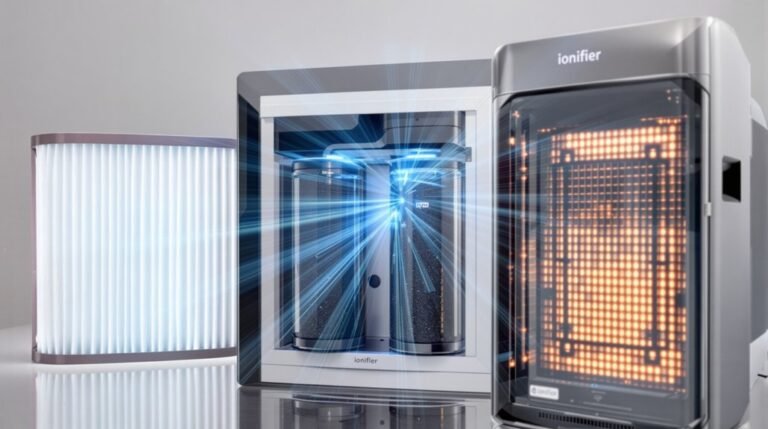
Skip ionizers and electrostatic models.
They often produce ozone, a respiratory irritant that won’t help your allergies.
Why HEPA Filters Are the Best Choice for Allergies
When you’re searching for an air purifier that actually tackles allergies, true HEPA filters consistently outperform every other option on the market. These filters capture at least 99.97% of airborne particles as small as 0.3 microns, effectively trapping pollen, pet dander, and fine dust before they trigger your symptoms.
Here’s what matters: choose a purifier with a CADR rating matched to your room size. Undersized units won’t improve indoor air quality enough to make a real difference. Also, skip ionizers and “HEPA-type” devices—they can release ozone that irritates allergies.
For whole-house protection, consider upgrading your HVAC system to MERV 11-13 filters. Just remember to replace filters regularly, typically every 6-12 months for purifiers, to keep allergens out of your breathing space.
Matching Your Air Purifier to Your Room Size
Choosing the right HEPA filter gets you halfway there, but your purifier won’t deliver relief if it’s too small for your space. Start by calculating your room’s square footage (length × width), then match it to the Clean Air Delivery Rate (CADR). Your purifier’s CADR should equal at least two-thirds of your room size for effective cleaning.
| Room Size (ft²) | Minimum CADR | Target ACH |
|---|---|---|
| 150 | 100 | 4-6 |
| 200 | 135 | 4-6 |
| 300 | 200 | 4-6 |
| 400 | 270 | 4-6 |
Check CADR ratings for specific particle types—pollen, dust, and smoke each have separate numbers. For pet dander or wildfire concerns, prioritize the relevant rating. Use the manufacturer’s maximum room size, run continuously during high-allergen periods, and consider multiple purifiers for larger spaces.
Air Purifiers That Can Make Allergies Worse
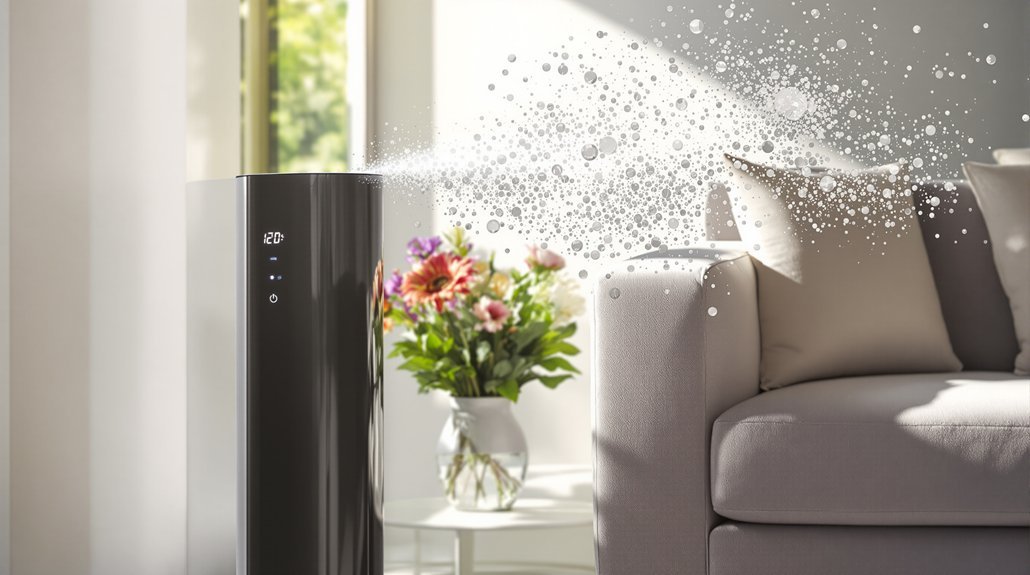
Although you might assume any device labeled “air purifier” will help your allergies, certain types can actually make your symptoms worse.
Ionic air cleaners and electrostatic room cleaners can produce ozone, a lung irritant that aggravates respiratory allergies and asthma. These devices often just force particles onto walls and surfaces rather than removing them from your air.
Ionic and electrostatic cleaners may produce ozone—a lung irritant that worsens allergies rather than relieving them.
UV-light air purifiers won’t capture pollen or pet dander—they simply can’t remove airborne particles. Similarly, “HEPA‑type” filters don’t meet true HEPA filter standards of 99.97% efficiency at 0.3 microns.
Your HVAC filters matter too. Cheap fiberglass furnace filters and clogged units restrict airflow and circulate more irritants.
Finally, any purifier with inadequate CADR for your room size or blocked vents won’t lower allergen levels effectively.
Reducing Pet Dander With an Air Purifier
Beyond avoiding the wrong air purifier, you’ll want to know which features actually work for specific allergens like pet dander. A true HEPA filter captures 99.97% of particles 0.3 microns and larger, including most airborne pet dander. Skip “HEPA-type” filters—they don’t meet the same standard.
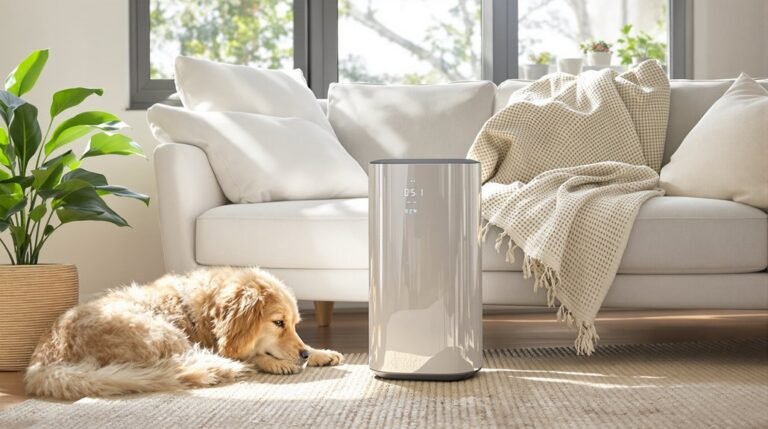
Match your air purifier’s CADR to your room size so the unit cleans the air several times per hour. Place in bedroom or living room where you and your pet spend the most time, and run continuously with doors and windows closed.
For best results, combine your purifier with regular grooming, wash pet bedding weekly, and vacuum using a HEPA-equipped vacuum. Replace filters every 6–12 months to maintain effectiveness.
Whole-House Filtration vs. Single-Room Purifiers
When you’re deciding between whole-house filtration and single-room purifiers, the choice often comes down to budget, convenience, and how severe your allergies are.
Whole-house filtration works through your central HVAC system—upgrading to a MERV 11–13 filter captures pollen, pet dander, and mold spores throughout every room. It’s hands-off once installed, though you should consult an HVAC pro first.
Single-room purifiers with a true HEPA filter offer faster particle reduction in specific spaces.
Match the CADR rating to your room size, and consider bedroom placement for overnight relief from indoor allergens.
Here’s the smart approach: combine both. Use portable HEPA units in high-exposure rooms while whole-house filtration handles general air quality.
Replace filters every three months to keep everything working effectively.
Proper Placement and Maintenance for Best Results
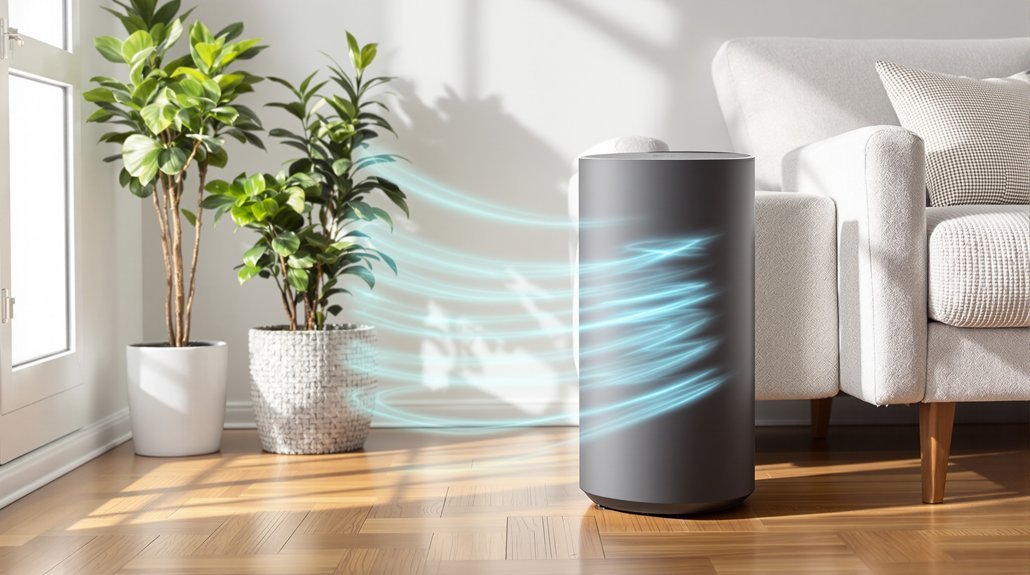
Since you’ve invested in a quality air purifier, getting the placement right makes all the difference in how well it actually works.
Proper placement transforms your air purifier from an expensive decoration into a genuine breathing improvement.
Match your unit’s CADR to your room size—a 200 square foot bedroom needs adequate airflow to cycle air several times hourly. Position the purifier a few feet from walls with the intake unobstructed and output directed toward your breathing zone.
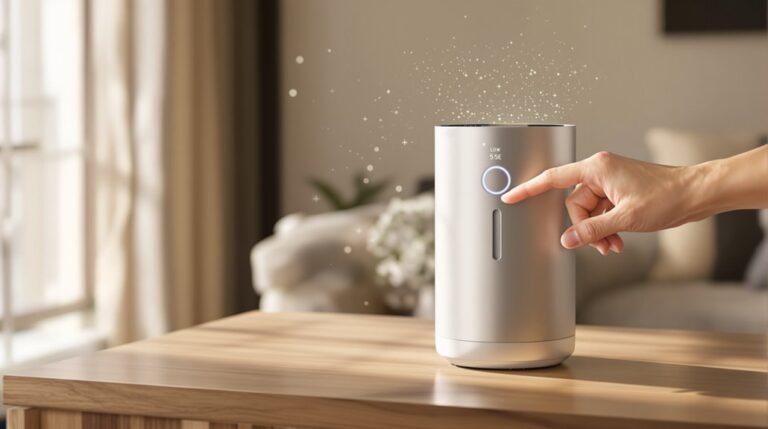
Run it continuously during allergy season with windows closed. You’ll need patience; noticeable improvements often take weeks.
Replace your HEPA filter every 6–12 months and clean the pre-filter monthly. Add a carbon filter for odors if needed.
One important warning: avoid ionizers that produce ozone, as they can irritate your respiratory system—the opposite of what you want.
Additional Home Strategies to Complement Air Purification
Along with your air purifier, a few simple habits around the house can dramatically cut your allergen exposure.
Start by keeping indoor humidity between 30–50% using a dehumidifier or air conditioner—this limits dust mites and mold that even the best HEPA filter won’t capture.
Vacuum high-traffic areas weekly with a vacuum with HEPA filtration, then let your purifier run for a few hours while stirred-up particles settle.
Upgrade your HVAC system to MERV 11-13 filters, changing them every three months.
Wash bedding weekly in water at least 130°F to eliminate pet dander and dust mites.
During high-pollen seasons, close windows during pollen peaks, remove shoes at the door, and groom pets outside.
These steps reduce indoor allergens before they ever reach your purifier.
Frequently Asked Questions
Do Air Purifiers Really Help With Allergies?
Yes, air purifiers genuinely help with allergies when you choose wisely.
True HEPA effectiveness captures 99.97% of particle sizes down to 0.3 microns, trapping pet dander, pollen seasons’ airborne triggers, and some mold spores.
You’ll want proper room circulation and consistent filter maintenance every 6–12 months.
However, skip ozone-generating ionizers due to ozone concerns.
VOC removal requires activated carbon filters.
Consider allergy testing to identify your specific triggers first.
Where Is the Best Place to Put an Air Purifier for Allergies?
Place your air purifier in your bedroom near your bed since you spend hours there breathing deeply.
Position it 1–3 feet from walls—avoid corner placement or tucking it behind furniture.
Keep window distance in mind; during high pollen days, close windows and set the unit near a doorway location to catch tracked-in allergens.
Floor placement works well for most units, ensuring clear airflow path throughout the room.
Is It Okay to Sleep With an Air Purifier on All Night?
Yes, it’s perfectly safe to run your air purifier all night.
Continuous operation helps remove pet dander and allergens while you sleep.
Choose a model with low noise levels and adjustable fan speed for better sleep quality.
Energy use is minimal on low settings.
Avoid units with ozone emission—stick with true HEPA filters.
Keep up with filter replacement every 6–12 months, and maintain proper bedroom placement near your bed.
Is There a Downside to Air Purifiers?
Yes, there are a few downsides to contemplate.
You’ll face costs ongoing for filter replacement every 3–12 months, plus energy use running 24/7.
Some ionic models raise ozone concerns that can irritate lungs.
Noise levels may disrupt light sleepers.
Maintenance time adds up, and units have limited range—they won’t clean your whole house.
Watch for chemical emissions from cheap models and false security from “HEPA-type” filters that miss pet hair and fine particles.
Bottom Line
You don’t have to suffer through allergy season in your own home. By choosing a properly sized HEPA air purifier, placing it correctly, and keeping up with filter changes, you’ll remove the airborne particles that trigger your symptoms. Combine your purifier with regular cleaning and humidity control for the best results. Start with one room—your bedroom is ideal—and breathe easier tonight.